
Agentic AI’s memory just went from concept to breakthrough. Forget generic chatbots—today’s systems remember, plan, adapt.
1. Landmark Agentic Memory Research
RoboMemory: Embodied Lifelong Learning
RoboMemory launched in August 2025. It mimics the brain’s memory modules—thalamus-like preprocessing, hippocampus-style episodic store, semantic layers, and a cerebellar executor. This modular architecture supports long-term planning and continual learning and outperforms leading models by up to 25% in success rate benchmarks. Embedded in physical robots, it addresses inference latency and consistency across tasks.
RoboMemory’s parallel memory updates and dynamic knowledge graph design make it scalable and efficient for embodied AI systems.
LiCoMemory: Lightweight, Hierarchical, Fast
In November 2025, LiCoMemory appeared. It solves memory entanglement by structuring recall via CogniGraph—a lightweight hierarchical graph that separates entities and relations. This enables fast, context-aware retrieval, temporal reasoning, and reduced latency in multi-session dialogue tasks. LiCoMemory outperforms existing benchmarks on long-term dialogue, proving its efficiency and accuracy advantages.
O‑Mem: Personalized, Self‑Evolving Memory
Also in November 2025, the Omni Memory System—or O‑Mem—hit the scene. It profiles users and updates dynamically, extracting persona traits and contextual events. Hierarchical retrieval enhances personalization, leading to nearly 3–3.5% improvements in key benchmarks like LoCoMo and PERSONAMEM, plus faster response times.
O‑Mem brings agents closer to long-term familiarity and adaptability.
A‑MEM: Zettelkasten‑Inspired Memory Networks
Early 2025 research introduced A‑MEM—a memory layer inspired by the Zettelkasten note system. Every interaction becomes a structured note with tags, keywords, descriptions. The system algorithmically links new entries to relevant older ones, enabling memory evolution and richer context awareness. Available code accelerates adoption by developers building adaptive memory systems.
2. Real‑World Agentic AI Moves
Microsoft: Copilot Gets Memory
In April 2025, Microsoft upgraded Copilot with memory—remembering user preferences like birthdays, hobbies, and booking habits. It can act proactively—book tickets, reserve tables, shop online. The “agentic” memory transform refines user experience beyond static interactions.
Windows 11: Experimenting with Agentic Features
By late 2025, Windows 11 Insider builds added an “experimental agentic features” toggle. When enabled, Copilot Actions can crop images, rename files, and organize content autonomously within a secure workspace. It demonstrates how operating systems may soon embed agentic memory directly into the OS layer.
AWS Reorg: Bet on Agentic AI
In March 2025, AWS created a dedicated agentic AI group, consolidating services like Bedrock and SageMaker under its compute division. Agency-focused efforts—notably around Alexa—signal Amazon sees agentic AI as a future business cornerstone.
3. Risks, Reality Check, and Standards
Gartner Forecast: High Dropout Rate
Gartner warned in mid‑2025 that over 40% of agentic AI projects may fail by 2027 due to high cost and unclear ROI. Many vendors are accused of “agent washing”—masking simple chatbots as agentic systems. Yet forecasts remain optimistic: by 2028, 15% of daily business decisions could be made autonomously, and 33% of enterprise software may include agentic capabilities.
Privacy Concerns from Signal
At SXSW 2025, Signal’s President warned that agentic AIs threaten user privacy. These systems often require deep access—browser history, calendars, encrypted messages—and could run off‑device, risking security. She cautioned against treating them like «magic genie bots» without safeguards.
Agentic AI Foundation: Toward Open Standards
In December 2025, the Linux Foundation launched the Agentic AI Foundation (AAIF) with backers like OpenAI, Google, Anthropic, AWS, Microsoft, and Block. The goal: build open, interoperable norms for agentic AI. Projects like MCP (Model Context Protocol) and goose aim to standardize tool integration, privacy-safe local execution, and vendor neutrality.
4. The Memory Cake: Layers That Matter
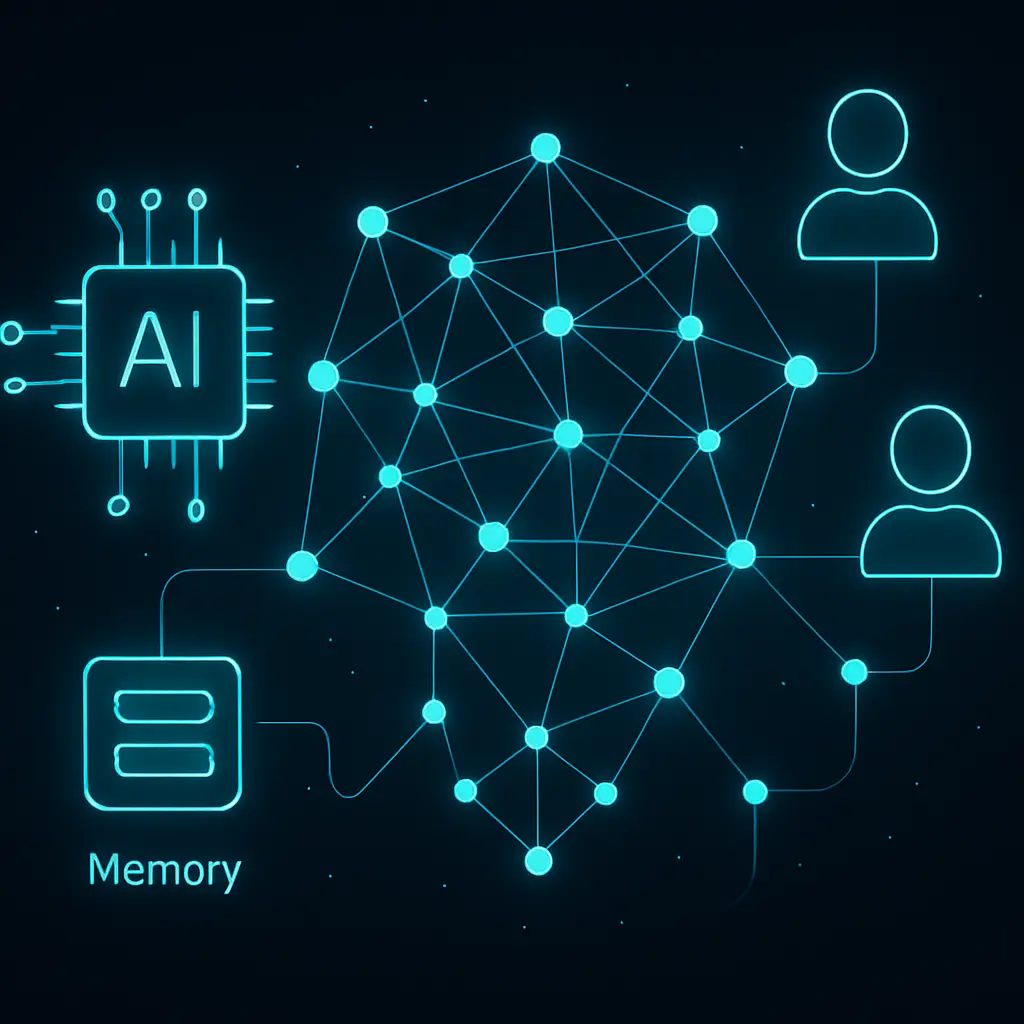
Agentic memory is no longer monolithic. Best practices now splice it into:
- Working memory—short-term context for immediate tasks. Often backed by SQL plus vector search.
- Episodic memory—logs of interactions and outcomes, used for case-based reasoning.
- Semantic memory—structured facts or rules stored via graphs or embeddings.
- Procedural memory—task patterns and workflows agents can execute or learn from.
This modular mental architecture allows personalized recall, multi-agent collaboration, and adaptive forgetting—critical as memory scales and diversifies.
Summary
Agentic memory matured fast in 2025. We saw smarter, modular frameworks like RoboMemory, LiCoMemory, O‑Mem, and A‑MEM redefine how agents remember and reason. Platforms—from Copilot to Windows and AWS—began embedding agentic memory. At the same time, standards bodies mobilized, and caution surged over ROI and privacy risks. We’re not in hype territory anymore. We’re building real agents that remember.
Explore multimodal memory-enabled agents, image generation, and hybrid RAG projects with Projectchat.ai—your hub for agentic AI workspaces and personalized project environments. Try it now: https://projectchat.ai/trial/