

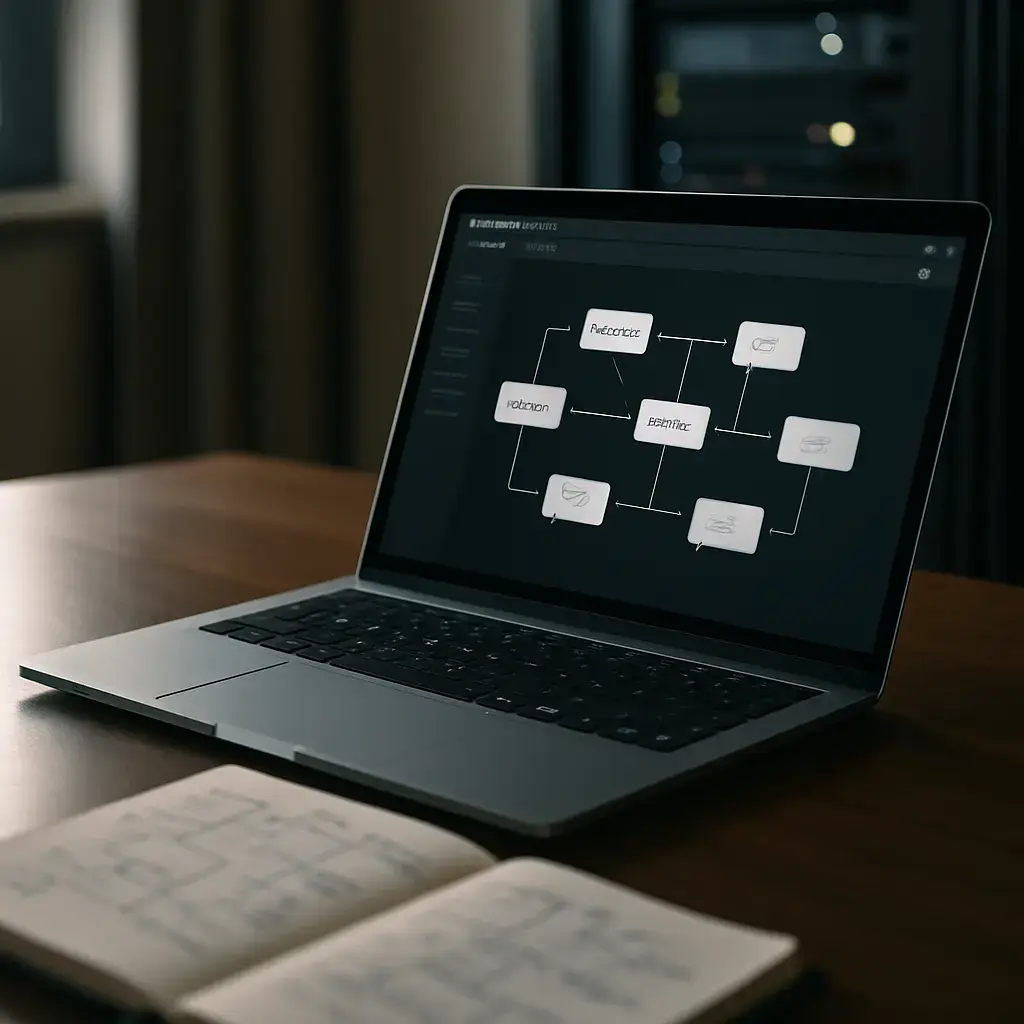
Agentic memory is moving from “nice-to-have” to the backbone of useful AI agents
If your agents still forget decisions, repeat questions, or drag entire chat logs into every tool call, you’re not hitting a model limitation—you’re hitting a memory architecture limitation. The latest wave of agentic memory advancements is less about bigger context windows and more about how agents store, retrieve, isolate, and govern information over time.
In 2025–2026, three forces reshaped the roadmap: (1) consumer-grade persistent memory going mainstream, (2) production frameworks treating memory as a first-class system, and (3) research shifting from “vector search over everything” to structured, secure, query-adaptive memory.
What “agentic memory” means in 2026 (in practical terms)
Agentic memory isn’t a single feature. It’s a set of mechanisms that let an autonomous or semi-autonomous system keep continuity across tasks and sessions without bloating prompts or leaking sensitive data.
- Working memory: what the agent is actively using right now (context window, scratchpad, short-term buffers).
- Episodic memory: what happened and when (decisions, outcomes, task traces, project milestones).
- Semantic memory: stable facts and knowledge (domain rules, customer info, system behavior, “what we learned”).
- Preference memory: how to behave (style, constraints, approvals, risk posture).
- Procedural memory: how to do things (workflows, tool usage patterns, playbooks).
The key advancement: teams are separating these layers and controlling them independently—different formats, different retention windows, different access rules.
Latest news: persistent memory becomes a product expectation
The biggest visible shift is that long-term memory is no longer limited to developer frameworks. In 2025, persistent memory features expanded in mainstream assistants, emphasizing two ideas: automatic continuity (the assistant learns from prior chats) and user controls (opt-out, deletion, temporary sessions). This pushed “memory” from an experimental capability into a baseline expectation for productivity use cases.
Why this matters for agent builders
As soon as users experience agents that remember goals and preferences, they stop tolerating re-explaining context. That creates product pressure to support:
- Cross-session continuity (projects don’t reset every chat)
- Selective recall (remember what matters, not everything)
- Auditability (what did the agent store, and why?)
- Compliance-ready controls (retention, deletion, scope)
Framework advancements: memory becomes modular, long-term, and database-backed
On the engineering side, agent orchestration frameworks are converging on a pattern: short-term state management + long-term memory store. Instead of stuffing everything into prompts, teams persist memory in external stores and retrieve only what the agent needs at decision time.
What’s changing in production architectures
- Memory as a configurable component, not a hidden chat buffer: you choose token budgets, summarization strategies, and long-term extraction rules.
- Remote persistence by default: SQLite for local experiments, Postgres/MongoDB/managed stores for real deployments.
- Session IDs and workspace boundaries: memory is scoped to a user, project, or environment to prevent cross-contamination.
- Composable memory: combine recency buffers with vector memory, summaries, and “knowledge cards.”
In parallel, vendors are shipping first-party integrations that make “memory persistence” easier to deploy without inventing your own storage abstraction.
Research breakthroughs: from similarity search to structured, query-adaptive memory
2026 research is increasingly blunt about what’s broken: dumping everything into a single embedding index creates slow retrieval, weak interpretability, and brittle reasoning. The newer work focuses on structure and policies.
Multi-graph memory: separating time, causality, entities, and semantics
One emerging direction models memory as multiple linked graphs—so a query can traverse the right view (temporal vs. entity vs. causal) instead of relying on one-size-fits-all similarity search. The benefit isn’t only accuracy; it’s transparency. You can explain why a memory was retrieved and what relationships led to it.
Query-aware indexing: latency becomes a first-class metric
As memory grows, brute-force retrieval becomes the bottleneck. Query-aware indexing designs introduce specialized indexes (temporal ranges, hierarchical semantic tags) so retrieval becomes sub-linear and predictable. In practice, this is the difference between an agent that “feels instant” and one that stalls long enough for users to abandon it.
Autonomous memory augmentation: improving what gets stored, not just how it’s retrieved
Another direction treats memory as an asset that can be refined over time. Instead of saving raw transcripts, the agent restructures and augments past interactions—turning messy history into more retrievable, semantically useful artifacts. This typically shows up as better recommendations, more consistent task continuity, and fewer contradictions.
Security advancements: memory isolation becomes the new prompt injection defense
As agents use more tools and browse more external content, indirect prompt injection becomes a memory problem—not just a prompt problem. The latest security work argues that the real vulnerability is indiscriminate memory accumulation: tool outputs, web text, and untrusted data get blended into the agent’s working context and persist across steps.
Hierarchical memory management and isolation
A promising approach borrows from operating systems: isolate worker contexts from the main agent. Tool calls happen in sandboxed sub-agents, and only schema-validated outputs can cross the boundary. This reduces the chance that malicious instructions survive multiple steps and also keeps the main context clean.
What to implement now (practical checklist)
- Trust boundaries: label sources (user, internal DB, web, vendor API) and apply different rules to each.
- Memory write policies: do not allow untrusted tool output to write to long-term memory without validation.
- Schema validation: require deterministic structured outputs for tool returns that can influence future actions.
- Redaction and minimization: store only what you need; avoid raw sensitive text when a structured summary will do.
What high-performing agentic memory systems look like right now
If you want your agent to feel coherent over weeks (not just a single chat), the best systems converge on a few design patterns.
Pattern 1: “Knowledge cards” instead of transcript hoarding
Store small, atomic memory objects—each with metadata and a clear purpose:
- Fact: stable, versioned
- Preference: mutable, latest-wins
- Decision record: timestamped, includes rationale and owner
- Task artifact: summary + pointers (links/IDs) to the source data
Pattern 2: Hybrid retrieval that matches how humans search
Pure semantic search misses exact terms. Pure keyword search misses paraphrases. Strong systems combine:
- Semantic retrieval for meaning
- Keyword/BM25 for exact matches
- Metadata filters for scope (project, user, time window, sensitivity)
Pattern 3: Tiered memory budgets
Instead of feeding more tokens, allocate budgets:
- Short-term: last N turns and current objectives
- Long-term: retrieved memories only (top-k, diversity constraints)
- Evidence: citations/pointers to ground truth sources inside your system
How to evaluate agentic memory without fooling yourself
Memory can make demos look better while quietly breaking reliability. Use evaluation that reflects real usage:
- Long-horizon tasks: multi-day projects, not single prompts
- Contradiction tests: can it update a preference and stop using the old one?
- Latency budgets: does memory retrieval keep interactions fast?
- Attack simulations: can untrusted tool output alter behavior across steps?
- Audit logs: can you explain what was stored, retrieved, and used?
Where agentic memory is heading next
Expect the next set of advancements to cluster around governance and interoperability:
- Memory governance: retention policies, legal hold, workspace-level controls
- Interchange formats: portable memory objects across models and providers
- Personal + enterprise separation: dual-layer memory that never cross-contaminates
- Reasoning trace minimization: store outcomes, not chain-of-thought, unless explicitly required
Summary
Agentic memory advancements in 2025–2026 are shifting the field from “bigger prompts” to better systems: structured memory objects, query-aware retrieval, database-backed persistence, and isolation-driven security. If your agent still relies on dumping history into context, you’re paying for tokens instead of building capability.
Call to Action: Build memory-enabled agents faster with Projectchat.ai
If you’re building agents that need reliable long-term memory, tool use, and secure retrieval over internal knowledge, test Projectchat.ai. It provides multimodal chat from all providers, access to image generation models, and Agentic/Hybrid RAG over your own data, so you can create dedicated workspaces and projects without stitching together a fragile stack. Start here: https://projectchat.ai/trial/